

human purpose : ค้นหาหนังสือธรรมะ หน้า 2 / 3
หน้าหนังสือทั้งหมด
125
Cultivating Transcendental Knowledge in Buddhism
It is for this reason that the Lord Buddha advocated his monks to cultivate transcendental knowledge in order to put themselves beyond the reach of sensuality [kāma], unwholesomeness [akusalamadhaṃma]
The Lord Buddha encourages monks to attain transcendental knowledge to rise above sensuality and eradicate False View. Achieving the First Absorption endows practitioners with joy, happiness, and focu
119
Dad, Why Were We Born?
Chapter 27
Dad, Why Were We Born?
One day, a family invited guests to their home for a
religious rite for the great-grandparent. After the ceremony,
when all the guests had left, the son asked the fat
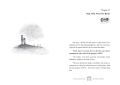
In this chapter, a father explains to his son the fundamental question of life's purpose that everyone contemplates, regardless of their status. After a ceremony honoring their great-grandparent, the

119
Dad, Why Were We Born?
Chapter 27
Dad, Why Were We Born?
One day, a family invited guests to their home for a
religious rite for the great-grandparent. After the ceremony,
when all the guests had left, the son asked the fat
"Dad, since everyone has to die like our great- grandparent, then what is the purpose of life?" The father, who had acquired knowledge about Buddhism, replied to his beloved son, "My son, deep down in

40
Death & Afterlife in Buddhism
Death & Afterlife
Monica
accumulate merits. Also, one should acknowledge
the purpose of being born a human so as to cease birth
and find the celestial realm as a halfway before
reaching the goal of ni
In Buddhism, the purpose of human life is to accumulate merits and strive for higher levels of meditation to achieve peace of mind, free from the fear of death. Buddhists seek to avoid reincarnation,
32
The Cycle of Existence and Human Purpose
32
32
THE WORLD'S
COMMON
PROBLEMS
X
Don't be Reckless
3 June 2007
When contemplating the reality of all animate
and inanimate beings like humans, animals,
trees, mountains, buildings or the earth itse
In contemplating the shared reality of all beings, we encounter a cycle of existence where everything is destined to take shape, exist temporarily, and ultimately perish. This includes not only human
113
Discovering Inner Transcendental Bodies
He further discovered that when the mind is relaxed in a standstill state, while resting at the center of the Dhamma Sphere, inner transcendental bodies will emerge, one after another: from coarse hum
This text discusses the emergence of inner transcendental bodies through relaxation at the center of the Dhamma Sphere. As the mind achieves a state of calm and stillness, one can transition through v
9
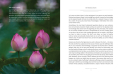
The Lotus Flower: A Symbol of Purity and Knowledge
THE LOTUS FLOWER
Held in high regard and respect for millennia by many differing cultures and segments of seeking humanity, the lotus flower is a symbol of purity and illumination rising from the mudd
The lotus flower has been a revered symbol across cultures for its representation of purity and illumination, emerging from the muddy depths of human suffering. The text emphasizes the ongoing human q
20
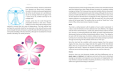
The Nature of the Human Body and Mind
the physical nature of the average human body consists of an articulated vertical spine and skeletal frame that enable efficient movement for standing, walking, running and sitting. this framework als
The human body consists of a vertical spine and skeletal frame facilitating movement while embodying a mortal nature that inevitably degrades. The mind, a refined element, holds memories and struggles
85
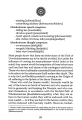
The Path of Wholesomeness and Unwholesomeness
- stealing [adinnāḍāna]
- committing adultery [kāmesumicchācāra]
Unwholesome speech comprises:
- telling lies [musāvāda]
- divisive speech [pisuṇaṅāṭa]
- harsh speech, insults and swearing [pharusavaṭ
In Buddhism, ten unwholesome behaviors are cautioned against: stealing, committing adultery, lying, divisive speech, harsh speech, idle chatter, covetousness, vengeful thinking, and false views. These
108
The Path to Spiritual Enlightenment
center of the Sphere of Concentration, the Sphere of Wisdom [paññā] will be attained. When we bring the mind to a standstill at the centre of the Sphere of Wisdom, the Sphere of Liberation [vimutti] w
This text outlines the spiritual progression as defined by the teachings of the Buddha, emphasizing the importance of concentration, wisdom, and the journey towards liberation. It explains how by brin
12
Untitled
10 : Universal Goodness
1.1 Where did one come from? Why is one here? Where does one go after one dies?
These three questions can stump even the most intelligent person on earth. On the day of one’s
No text provided for summarization.
85
การทำงานร่วมกันเพื่อชีวิตที่มีเป้าหมาย
ทั้งหมดนี้ทำเพื่อความของเราเองและเพื่อภาพรวม ก็คือลูงพันจากการเป็นนาวเป็นทาสของพญามารทั้งหมด เพราะฉะนั้นความรักและสามัคคีกันเป็นทีม ทั้งรักตัวเองและรักหมู่คณะ รักที่จะศึกษาเรียนรู้ อยู่ร่วมกันอย่างสุภ
เนื้อหานี้พูดถึงความสำคัญของความรักและความสามัคคีในการทำงานร่วมกันเพื่อให้เข้าใจในเป้าหมายชีวิตและการมีชีวิตอย่างมีความหมาย โดยการทำงานร่วมกันทั้งในด้านงานหยาบและงานละเอียด ผลงานในระดับนี้จะช่วยขจัดอุ
13
Untitled
into the hell from whence they came.
Some emerged from darkness into the light. They
used their human life as a turning point for their unskil-
ful past, doing only good deeds, making only progress
be
No content provided for summary.
61
The Importance of Human Development in Buddhism
Luang Phaw Dhammajayo realises that human beings are the most valuable natural resource and one of the most important factors for guiding society in the future. He focuses on developing human beings b
Luang Phaw Dhammajayo highlights that human beings are the most valuable natural resource for guiding society. By utilizing Buddhist knowledge, he focuses on developing the mind to uplift individuals
137
The Five Precepts That Parents Should Know
The Five Precepts That Parents Should Know
Teaching their children to abide by the Five Precepts is the utmost important responsibility of parents to help counteract social deterioration. However, be
Teaching children the Five Precepts is essential for parents to combat social decline. Parents must first understand the meaning of a precept, its connection to human nature, and the consequences of n

82
Bhojana Sutta: The Significance of Giving a Meal
8. Bhojana Sutta:
A Meal
"In giving a meal, the donor gives five things to the recipient
Which five? He/she gives life, beauty, happiness, strength, & quick - wittedness.
Having given life, he/sh
The Bhojana Sutta highlights the spiritual significance of giving a meal, describing how the donor, by providing food, imparts five essential qualities to the recipient: life, beauty, happiness, stren
108
Understanding Defilements and Dhamma in Buddhism
Meticulous with a Dharma Messenger
If we are not mindful, then defilements become even more apparent to us. We must bring together concentration, effort, and meditation. They must all come together.
This text delves into the importance of mindfulness to combat defilements and achieve purity through meditation. It emphasizes the synergy of concentration, effort, and mindfulness. The Buddha's journ
14
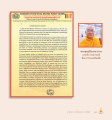
Celebrating 55 Years of Dhammakaya Foundation Day
SIDDHARTH UNITED SOCIAL WELFARE MISSION (SUSWM)
International Humanitarian & Spiritual Organization
BHARATIYA SANGHARJA BHIKKHUI MAHASABHA W.B
(Regional Centre for the World Fellowship of Buddhists)
The 55th anniversary of Dhammakaya Foundation Day will be celebrated on February 12, 2025, at the Dhammakaya Centre in Pathumani, Thailand. This event, coinciding with the holy Maghapuja Day, honors t
106
Understanding the Middle Way in Dhamma Practice
In terms of practice however, Luang Phaw Wat Paknam explained how we can know we are practicing the Middle Way in the sermon he gave on the Dhammacakkapavattana Sutta on 3 January 1955. He explained t
In his sermon on the Dhammacakkapavattana Sutta, Luang Phaw Wat Paknam elucidates the profound significance of the Middle Way, urging practitioners to find stillness at the body’s central point. This
123
Understanding Suffering and the Subtle Human Body
wealth. As the majority of sorts of suffering concerns material things, having attained the subtle human body, the mind, being unified with the subtle human body, is safely withdrawn beyond the reach
This text discusses why most people suffer due to attachment to their physical bodies and possessions, despite intellectually understanding Buddha's teachings on impermanence. The author emphasizes th